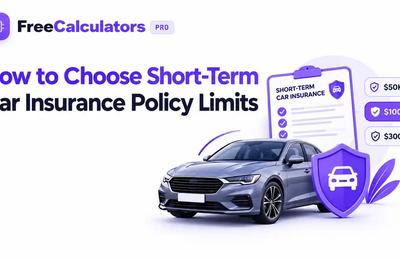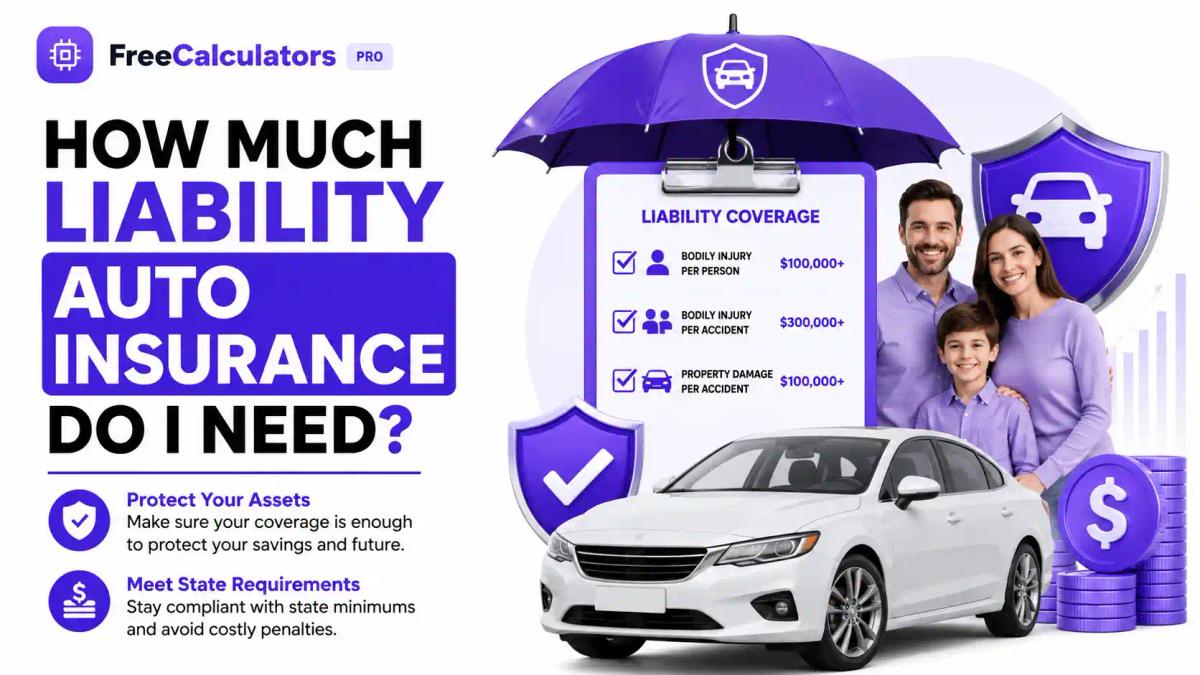
Most drivers should carry at least 100/300/100 liability coverage — $100,000 per person and $300,000 per accident for bodily injury, plus $100,000 for property damage — rather than relying on state minimum limits. The right amount depends on your assets, income, and risk exposure, but state minimums rarely provide enough protection if you cause a serious accident.
Introduction
If you've ever stared at your insurance renewal notice and wondered whether you're actually protected, you're not alone. Liability auto insurance is one of the most misunderstood parts of a car insurance policy, largely because state law only requires a minimum amount — not necessarily an adequate amount.
The gap between "legal" and "sufficient" is where most drivers get into financial trouble. A single serious accident involving multiple injured parties can easily generate medical bills, lost wages, and legal costs that exceed $100,000 — and if your policy limits fall short, you could be personally on the hook for the rest.
This guide breaks down exactly how liability coverage works, what the numbers in a policy like 100/300/100 actually mean, and how to figure out the right liability limits for your specific situation — whether you're a new driver, a homeowner, or someone with significant assets to protect. Along the way, you can use a free [auto insurance calculator] to estimate what your ideal coverage might cost.
What Is Liability Auto Insurance?
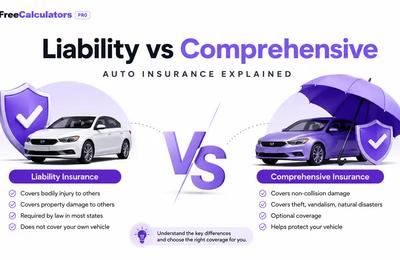
Liability car insurance is the portion of your auto policy that pays for injuries and property damage you cause to other people in an accident. It does not pay for your own injuries or your own vehicle — that's what collision and medical payments coverage are for.
Liability coverage has two main components:
- Bodily injury liability — covers medical expenses, lost wages, and legal defense costs for people injured in an accident you caused.
- Property damage liability — covers repair or replacement costs for another person's vehicle, fence, mailbox, or other property damaged in the accident.
Nearly every U.S. state requires drivers to carry some form of liability insurance, though the required minimums vary widely from state to state. In the United Kingdom, the equivalent is commonly called third party car insurance, which serves the same basic function under a different name.
Why Liability Insurance Matters
Liability insurance exists to protect other people from the financial consequences of your driving — but it also protects you. Without adequate liability limits, a lawsuit stemming from an accident could put your savings, your home equity, and even future wages at risk through wage garnishment.
According to the Insurance Information Institute, at-fault accidents involving serious injuries frequently produce claims well above $50,000 per person once medical treatment, rehabilitation, and lost income are factored in. State minimum limits — often as low as $25,000 per person — can be exhausted quickly in these situations, leaving the at-fault driver personally liable for the remainder.
This is why insurance professionals so often recommend limits above the legal minimum, particularly for drivers who own a home, have savings, or earn a steady income that could be targeted in a judgment.
How Liability Insurance Works
When you're found at fault for an accident, your liability insurance coverage responds in a defined order:
- The injured party or property owner files a claim.
- Your insurer investigates and determines fault.
- If you're liable, the insurer pays covered damages up to your policy limits.
- If damages exceed your limits, you are personally responsible for the difference — potentially through a lawsuit.
This is the core reason drivers ask, "what happens if my liability insurance runs out?" The honest answer: once policy limits are exhausted, the injured party can pursue the at-fault driver directly for the remaining balance. This is exactly the scenario that umbrella insurance is designed to prevent, since it adds an extra layer of liability protection once your auto or home policy limits are used up.
Understanding Liability Coverage Numbers: 25/50/25 vs. 100/300/100
Liability limits are usually written as three numbers, such as 100/300/100. Here's what each figure means:
| Format | Per-Person Bodily Injury | Per-Accident Bodily Injury | Property Damage |
| 25/50/25 (common state minimum) | $25,000 | $50,000 | $25,000 |
| 50/100/50 | $50,000 | $100,000 | $50,000 |
| 100/300/100 (commonly recommended) | $100,000 | $300,000 | $100,000 |
Some insurers also offer a combined single limit (CSL) policy instead of split limits. A CSL policy provides one total amount — say, $300,000 — that can be applied to any combination of bodily injury and property damage claims from a single accident, offering more flexibility but requiring careful evaluation of overall exposure.
A free [liability coverage estimator] can help you compare split-limit and combined-single-limit options side by side based on your state and driving profile.
State Minimum Insurance vs. Recommended Coverage
Every U.S. state sets its own financial responsibility laws, which dictate the minimum liability insurance a driver must carry to legally operate a vehicle. These minimums differ significantly — some states require as little as $25,000 per person in bodily injury coverage, while others require higher limits.
The problem is that state minimum liability insurance was never designed to reflect the real cost of modern accidents, medical care, or vehicle repairs. Insurance regulators, including those represented by the National Association of Insurance Commissioners (NAIC), generally encourage consumers to evaluate their personal financial exposure rather than defaulting to the legal floor.
If you're asking, "is state minimum insurance enough?" — the honest answer for most drivers with savings, a home, or steady income is no. State minimums are a legal baseline, not a financial safety net.
You can check your specific state's requirements using a [state minimum insurance lookup tool], and compare that against a recommended coverage level using a [car insurance coverage calculator].
How Much Liability Insurance Do You Actually Need?
There's no single number that fits every driver, but financial professionals typically recommend sizing your liability limits around your personal asset protection needs. Consider the following factors:
1. Your Net Worth and Assets
The more you own — savings, home equity, investments — the more a plaintiff's attorney could pursue in a lawsuit. Higher liability limits act as a shield around those assets.
2. Your Income
Future wages can be garnished to satisfy a judgment in many states. Higher earners generally benefit from higher liability limits.
3. Household Size and Driving Habits
More drivers and more miles driven mean more exposure to accidents, which increases the case for higher limits.
4. Whether You Own a Home
Homeowners face additional exposure because home equity is a visible, attachable asset in a lawsuit — one more reason many advisors recommend pairing higher auto liability limits with an [umbrella insurance calculator] to evaluate whether additional protection makes sense.
5. State Legal Environment
Tort system states, where injured parties can sue at-fault drivers directly, generally warrant higher liability limits than no-fault insurance states, where each driver's own insurer covers certain losses regardless of fault.
A simple rule many financial planners use: liability limits should roughly match or exceed your total net worth, with $100,000/$300,000/$100,000 serving as a reasonable floor for most middle-income households.
Liability Insurance vs. Full Coverage
A common point of confusion is the difference between liability insurance vs. full coverage. Liability-only insurance pays for damage and injuries you cause to others — it does not repair or replace your own vehicle. "Full coverage" is not an official insurance term but generally refers to a policy that combines liability with:
- Collision coverage — pays for damage to your own car after an accident, regardless of fault.
- Comprehensive coverage — pays for non-collision damage like theft, weather, or vandalism.
- Uninsured/underinsured motorist coverage — protects you if the at-fault driver has no insurance or insufficient limits.
If your vehicle is financed or leased, your lender will almost always require full coverage. If you own your car outright and it has a low market value, liability-only coverage paired with strong limits may be a reasonable cost-saving option — something you can model with a [full coverage vs. liability insurance calculator].
Best Free Tools to Estimate Your Liability Insurance Needs
Figuring out the right liability limits doesn't have to involve guesswork. FreeCalculators.tools offers several free, no-signup calculators that can help you model different coverage scenarios before you talk to an agent:
- [Auto Insurance Calculator] — estimate premium costs across different liability limits
- [Car Insurance Calculator] — compare liability-only versus full coverage scenarios
- [Life Insurance Calculator] — evaluate how life insurance and auto liability work together in an overall financial plan
- [Homeowners Insurance Calculator] — see how home and auto liability limits interact for combined asset protection
- [Umbrella Insurance Calculator] (referenced conceptually) — model the added protection an umbrella policy provides above your auto liability limits
Using a combination of these tools gives you a clearer financial picture than relying on a single insurer's quote alone.
Common Mistakes People Make With Liability Insurance
- Assuming state minimum is "normal coverage." Many drivers carry the legal minimum simply because it's the default quote, not because they've evaluated their actual risk.
- Ignoring assets outside the car. Home equity, savings, and future income are all exposed in a liability lawsuit, not just the value of the vehicle.
- Confusing liability with full coverage. Liability doesn't repair your own car — a mistake that surprises many drivers after their first at-fault accident.
- Not revisiting limits after major life events. Buying a home, getting a raise, or paying off a car loan are all good triggers to reassess your liability coverage.
- Overlooking umbrella insurance. High-net-worth individuals and homeowners often need more protection than a standard auto policy alone can provide.
- Choosing limits based on premium alone. The cost difference between state minimum and 100/300/100 coverage is often smaller than people expect relative to the added protection.
Practical Examples
Example 1: New Driver, Few Assets A 22-year-old renter with no savings and a modest income may reasonably carry state minimum or slightly above it, since there's limited personal wealth for a plaintiff to pursue — though even here, many advisors suggest at least 50/100/50 for future-proofing.
Example 2: Homeowner With a Family A homeowner with $150,000 in home equity and two teen drivers in the household faces significant exposure. A 100/300/100 policy, potentially paired with an umbrella policy, is a common recommendation in this scenario.
Example 3: High-Net-Worth Individual Someone with substantial investments, multiple properties, or a high income may need liability limits well above 100/300/100, often supplemented with a $1 million (or higher) umbrella policy for comprehensive asset protection insurance.
Future Trends in Liability Auto Insurance
Several developments are shaping how liability coverage decisions are made:
- AI-powered insurance recommendations are increasingly helping consumers match coverage levels to their real financial exposure rather than defaulting to state minimums.
- Usage-based insurance programs are influencing how insurers price liability risk based on actual driving behavior.
- Rising repair and medical costs — partly linked to inflation and more expensive vehicle technology — are pushing many advisors to recommend higher liability limits than in previous years.
- Autonomous and semi-autonomous vehicle features are beginning to raise new questions about liability allocation between drivers and manufacturers, an area regulators continue to monitor.
- Climate-related repair cost increases are contributing to higher average property damage claims in many regions.
Frequently Asked Questions
What is liability auto insurance? Liability auto insurance covers injuries and property damage you cause to other people in an accident you're responsible for. It does not cover your own vehicle or your own medical bills, which require separate coverage types like collision or medical payments insurance.
How much liability insurance do I need? Most financial professionals recommend at least 100/300/100 coverage — $100,000 per person, $300,000 per accident for injuries, and $100,000 for property damage — though the right amount depends on your assets, income, and risk tolerance.
Is state minimum insurance enough? For drivers with savings, home equity, or steady income, state minimum limits are often not enough to fully protect personal assets in a serious accident. State minimums reflect legal requirements, not financial adequacy.
What is the difference between liability insurance and full coverage? Liability insurance only pays for damage you cause to others. Full coverage adds collision and comprehensive insurance, which pay for damage to your own vehicle regardless of fault.
What happens if damages exceed my liability limits? If a claim exceeds your policy limits, you become personally responsible for the remaining balance, which can lead to a lawsuit, wage garnishment, or liens against personal assets.
Should I buy umbrella insurance in addition to auto liability coverage? Umbrella insurance is worth considering if you own a home, have significant savings, or carry auto liability limits at or near your policy maximum, since it extends protection beyond what your auto policy alone provides.
What is the difference between split limits and combined single limit coverage? Split limits set separate caps for per-person injury, per-accident injury, and property damage. A combined single limit provides one total amount that can be applied flexibly across all types of damage from a single accident.
Does liability insurance cover my own car? No. Liability insurance only pays for the other party's injuries and property damage. You need collision coverage to repair or replace your own vehicle after an at-fault accident.
How do I calculate the right liability limits for my situation? A good starting point is comparing your total assets and income against potential claim costs using tools like an [auto insurance calculator] or [liability coverage estimator], then adjusting based on your state's legal environment and personal risk factors.
Is 100/300/100 liability coverage expensive compared to state minimum? The premium difference between state minimum and 100/300/100 coverage is often smaller than expected, since liability coverage is generally one of the more affordable parts of an auto insurance policy relative to the protection it provides.
Key Takeaways
- Liability auto insurance pays for injuries and property damage you cause to others, not your own vehicle or injuries.
- State minimum liability insurance is a legal requirement, not necessarily adequate financial protection.
- 100/300/100 liability coverage is a commonly recommended baseline for drivers with assets to protect.
- Split limits and combined single limit policies structure liability protection differently — compare both.
- Homeowners, high earners, and multi-driver households generally need higher liability limits.
- Umbrella insurance can extend protection once auto liability limits are exhausted.
- Liability insurance is different from full coverage, which also protects your own vehicle.
- Free online calculators can help estimate appropriate coverage before speaking with an insurer.
Expert Summary
Choosing the right liability auto insurance limits comes down to balancing legal requirements against real financial exposure. While every U.S. state sets a minimum liability requirement, these minimums rarely reflect the true cost of serious accidents involving medical care, lost wages, or property damage. Financial professionals commonly recommend 100/300/100 coverage as a practical baseline, with higher limits — or an added umbrella policy — for homeowners, high earners, and households with significant assets. Reviewing coverage after major life changes, such as buying a home or paying off a vehicle, helps ensure liability limits keep pace with personal financial exposure.
Conclusion
Liability auto insurance is one of the most important — and most overlooked — decisions you'll make about your car insurance policy. State minimums exist to satisfy legal requirements, not to protect your savings, your home, or your future income. By understanding how bodily injury and property damage liability work, comparing split-limit and combined-single-limit options, and factoring in your personal assets and risk exposure, you can choose coverage that actually protects you — not just your vehicle.
Call to Action
Ready to find the right liability coverage for your situation? Visit [FreeCalculators.tools] to explore free, easy-to-use calculators — including the [Auto Insurance Calculator], [Car Insurance Calculator], and [Life Insurance Calculator] — and get a clearer picture of the protection you need before you buy your next policy. You can also browse the full library of [financial planning tools] or check out our related guide on [how much term life insurance you need in 2026] to round out your family's financial protection plan.